
Sunday, August 9th, 2026
One of the most powerful tools for a coach to use is photography/videography, especially when working on ‘technical’ events. As much of my coaching experience has been in Hurdles and Triple Jump, I’ve used a range of cameras and techniques, but I am always learning from others.
The theory is that if you show athletes an image of themselves executing a technique they can better visualise the movements they need to make to improve that technique.
But it’s not limited to the ‘technical’ events – sprinters can use vidoegraphy to better understand their leg extension and arm action to help optimise speed and power, and endurance athletes can better understand their foot-strike to improve efficiency.
This article offers some examples of how these techniques can be used – if you have further examples, please pass to the author to update the article.
While video can capture the whole movement, still photos capture a moment, allowing the coach to draw attention to a particular part of the technique.
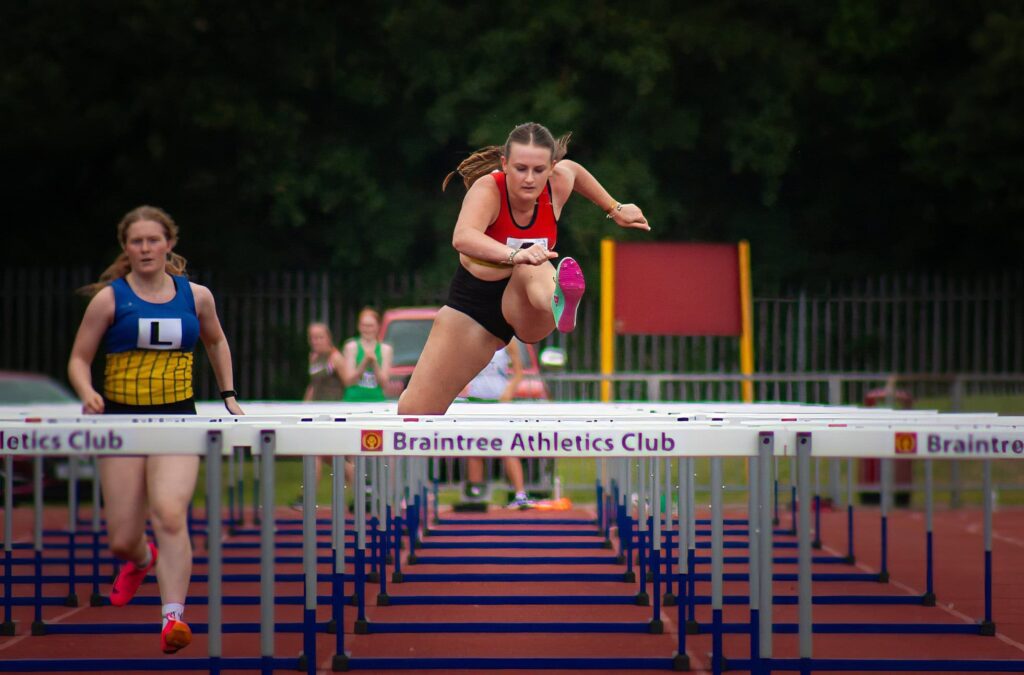
Natalie Potter – showing excellent technique in the 100mH, but picking up two points to consider for further refinement – height above the barrier and that she is looking down instead of towards the next flight of barriers.
Photo sequences take still photography a stage further. Sequences break the technique into a series of snapshots, that allow the coach to isolate improvement in one part of the movement and show its influence on performance of a later part of the technique.
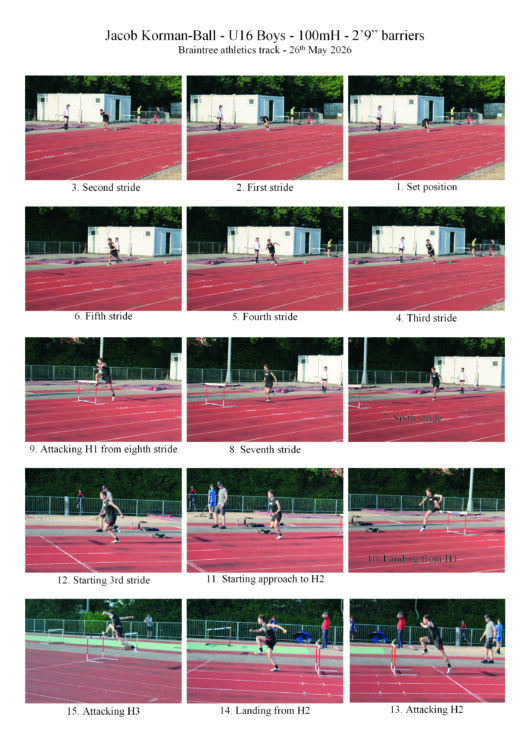
Photo Sequence of a Sprint Hurdler coached by the author. Good attack into the hurdle, but collapsing on landing so hips are dropped before attacking the next hurdle.
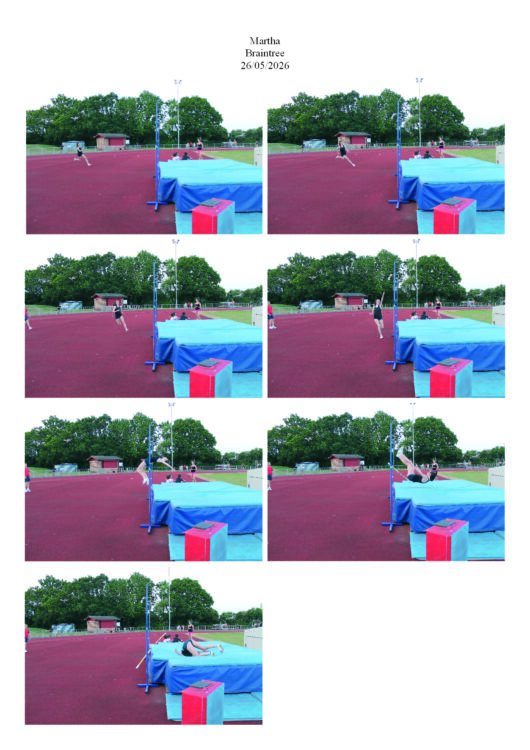
Photo sequence showing Martha’s high jump take off. Good approach, but a hint of a lean into the bar at take-off.
Video allows you to capture the whole movement. And using modern devices such as tablet computers, you can playback to the athlete immediately giving instant feedback.
The examples below were filmed at Braintree Gymnastics Club where two of our high jumpers were learning how to back-flip to help improve the flight phase of their jumps.
It is important that photography and videography is carried out ethically. Coaches should always have the agreement of the athlete to record, and in the case of under-18 athletes, you should also seek parental agreement.
If planning to keep photographs or videos for future reference, make this clear to the athlete and parents as well. Explain why you are keeping the images on file, how they will be used, and for how long they will be kept. And be prepared to delete copies if requested at a later date.
The same applies to images used in Social Media and on the club’s website.
The club records details of athletes who should NOT be photographed, for various reasons, notified on their application form, and coaches should try to be aware of these notifications.
The club ha a ‘Photography and Videography Policy‘ which should be followed at all times to help manage the use of photography and videography so that coaches and athletes can use these techniques safely.








© 2026 Braintree & District Athletic Club. All rights reserved. Responsive Web Design